top of page

Practical Tax Insights for Real Estate Investors
Written by a CPA, Tax Strategist, and Former Federal Government Auditor


Buying a Rental Property Before Year-End: Does the Closing Date Give You the Deduction?
December 31st is approaching, and you may be considering buying another rental property before the end of the year. From a tax-planning perspective, it can be tempting to focus on one date: the closing date. But closing on a rental property and placing that property in service are not necessarily the same thing. That distinction matters because rental property depreciation generally begins when the property is placed in service—not simply when you purchase it. For real estate
lisa9372
2 days ago3 min read


Rental Property Repairs vs. Improvements: What Can You Actually Deduct?
Real estate investors often spend significant amounts maintaining, repairing, and improving their rental properties. But spending money on a property does not automatically mean the entire expenditure is deductible in the year it is paid. The distinction between a repair and an improvement can affect the timing of the tax benefit. Certain repair and maintenance expenses may qualify for a current deduction, while improvements generally must be capitalized and recovered over ti
lisa9372
Sep 161 min read


Does an LLC Really Save You Money on Taxes?
Does forming an LLC automatically save a real estate investor money on taxes? It’s a common misconception. An LLC can be an important part of a real estate investor’s overall structure, but simply creating an LLC does not automatically lower the owner’s federal income-tax bill. That’s because legal structure and federal tax treatment are not the same thing. A single-member LLC may be disregarded for federal income-tax purposes, while other LLCs may be taxed differently depend
lisa9372
Sep 91 min read


HSA Triple Advantage: More Than a Medical Savings Account
When most people hear “Health Savings Account,” they think of an account used to pay for doctor visits, prescriptions, and other medical expenses While that is certainly one way to use an HSA, it is only part of the story. For eligible taxpayers, a Health Savings Account can be one of the most tax-efficient accounts available because it has the potential to provide three separate federal tax advantages. That combination is why HSAs are often described as offering the “triple
lisa9372
Aug 53 min read

S Corporation Home Office Deduction: Why an Accountable Plan Matters
Many S corporation owners work from home and personally pay business expenses such as internet service, office supplies, business mileage, and home office expenses. Unfortunately, many assume they can simply deduct these expenses on their individual tax return. Why S Corporation Owners Are Different Because an S corporation is a separate legal entity, shareholder-employees generally cannot claim unreimbursed home office expenses on their individual federal income tax return t
lisa9372
Jul 291 min read

Should You Pay Taxes Now or Later? Understanding the Roth vs. Traditional IRA Decision
Introduction Should you pay taxes now…or later? At first glance, choosing between a Roth IRA and a Traditional IRA appears to be a decision between two retirement accounts. In reality, you’re making a much more important decision—you’re deciding when you want to pay taxes. That decision could affect your financial future for decades. Many people search for the “best” retirement account, hoping there’s a simple answer. Unfortunately, retirement planning rarely works that way.
lisa9372
Jul 224 min read


Solo 401(k) vs. SEP IRA: Which Retirement Plan Is Right for Your Business?
Choosing between a Solo 401(k) and a SEP IRA is not simply about contribution limits. The right retirement plan depends on your business structure, whether you have employees, your future hiring plans, your cash flow, and your long-term tax strategy. In this video, I compare the Solo 401(k) and the SEP IRA side by side to help business owners understand the key differences between these two retirement plans. We will discuss eligibility, contribution opportunities, employee co
lisa9372
Jul 153 min read

SEP IRA Explained (2026): Is It the Right Retirement Plan for Your Business?
Choosing the right retirement plan isn’t just about saving for the future—it’s about making smart tax decisions today. In this video, I explain how SEP IRAs work, who they’re designed for, and why selecting the wrong retirement plan can become an expensive mistake. You’ll also learn why retirement planning should be part of your overall tax strategy rather than a last-minute tax season decision. What You’ll Learn What a SEP IRA is Who should consider opening one When a SEP IR
lisa9372
Jul 81 min read


Should You Open a Solo 401(k)? The Tax Strategy Most Business Owners Miss
CPA, EA & Former Federal Auditor Lisa Marie Odeja Explains Whether You Should Open a Solo 401(k) If you’re a real estate investor or business owner wondering whether you should open a Solo 401(k), you’re asking an important question. But it may not be the right first question. The better question is whether a Solo 401(k) fits into your overall tax strategy. In this video, I explain who qualifies, how the 2026 contribution limits work, how age can affect your contribution li
lisa9372
Jul 13 min read

LLC vs. S-Corp: What Actually Saves Taxes?
Many business owners assume that forming an LLC automatically reduces taxes. In reality, an LLC and an S-Corporation serve different purposes, and understanding the distinction can be an important part of an effective tax planning strategy. Should You Form an LLC or Elect S-Corp Status? One of the most common questions I hear is: “Should I form an LLC or elect S-Corporation status?” The answer is often more complicated than social media makes it seem. Understanding the Differ
lisa9372
Jun 242 min read


CPA and former federal auditor Lisa Marie Odeja explains five popular real estate tax strategies, including Cost Segregation, REPS, Short-Term Rentals, Bonus Depreciation, and 1031 Exchanges.
This is actually one of the most common situations I help real estate investors navigate. Creating the deduction is usually the easy part. Determining whether you’ll actually benefit from the deduction is where strategic planning becomes important. If you’d like to explore how these strategies may apply to your situation, you can schedule a consultation using the link below. https://pinfin.cpa/book 5 Real Estate Tax Strategies Successful Investors Use Introduction Most real e
lisa9372
Jun 173 min read


Things Successful Real Estate Investors Do Differently
INTRODUCTION Have you ever wondered why some real estate investors seem to consistently build wealth while others work just as hard but never seem to get ahead? After working with real estate investors for years, I’ve noticed something. The investors who consistently build wealth aren’t necessarily smarter than everyone else. They simply tend to make different decisions. Over time, those decisions compound. Better decisions often lead to better opportunities, stronger financi
lisa9372
Jun 103 min read


My CPA Said I Couldn’t Do That. Here’s What I Found.
One of the biggest misconceptions I hear from taxpayers is when they say, “My CPA told me I couldn’t do that.” In many cases, after asking a few questions, I discover the person they’re referring to isn’t actually a CPA at all—or they may not specialize in tax strategy. Understanding the differences between tax professionals can significantly impact the quality of advice you receive and the opportunities that may be available to you. Not All Tax Professionals Have The Same Sp
lisa9372
Jun 31 min read

How Strategic Tax Planning Helped Avoid a Massive Capital Gains Tax Problem
How Strategic Tax Planning Helped Avoid a Massive Capital Gains Tax Problem A real estate investor recently came to me believing she had only one option: Sell her residence and pay a massive capital gains tax bill. But after reviewing the full situation, it became clear we weren’t just dealing with taxes. We were dealing with: retirement timing relocation planning investment property cash flow long-term wealth positioning and preserving future planning opportunities This is w
lisa9372
May 272 min read

Why Cost Segregation Doesn’t Always Lower Your Taxes
Cost segregation is often promoted as a powerful tax strategy for real estate investors because it can accelerate depreciation and create larger deductions earlier. But larger deductions do not automatically mean lower taxes. The Problem With Assuming Bigger Deductions Always Help The key question is whether those deductions can actually be used in your current tax situation. Depending on your income, activity level, passive loss limitations, entity structure, and overall tax
lisa9372
May 201 min read

Real Tax Strategy Isn’t Just About What You Can Take — It’s About What You Can Defend
Why Real Tax Strategy requires More Than Just a Deduction There’s a lot of tax strategy information being shared right now—but not all of it is being explained properly or in the right context. What Many Investors Overlook One of the biggest mistakes real estate investors and business owners make is focusing only on the strategy itself without fully understanding: • implementation • documentation • entity structure • timing • and how the position would actually be suppor
lisa9372
May 131 min read

You Have Real Estate Losses… But You Still Can’t Use Them?
What This Means You may be reporting real estate losses on your tax return… But that doesn’t automatically mean you can use them. For many investors, those losses are limited—or not allowed at all. This video breaks down why that happens and what actually determines whether those losses are usable. Why This Matters If your losses aren’t usable… they don’t reduce your taxes. And most investors don’t realize that until after the return is already filed. Because it’s not just ab
lisa9372
May 61 min read

You Filed Your Taxes and Didn’t Like the Result — What Actually Changes Next Year?
What This Means You just filed your taxes… and didn’t like the result. For many real estate investors, that comes down to one thing—nothing actually changed going into the year. This video breaks down why that happens and what needs to change if you want a different outcome. Why This Matters If nothing changes…next year’s result won’t either. Because it’s not just about knowing what strategies are available— it’s about whether you’re actually in a position to use them. What’s
lisa9372
Apr 291 min read

Tax Strategies Being Promoted Right Now—What Real Estate Investors Need to Know
There are tax strategies being heavily promoted to real estate investors right now that appear legitimate—but are creating issues when reviewed. The IRS continues to flag certain approaches as part of its “Dirty Dozen,” and many investors are finding out too late that what they were told doesn’t align with what actually qualifies. In this video, I walk through what’s happening and what investors should be aware of before moving forward with any tax strategy. What’s Actually H
lisa9372
Apr 222 min read
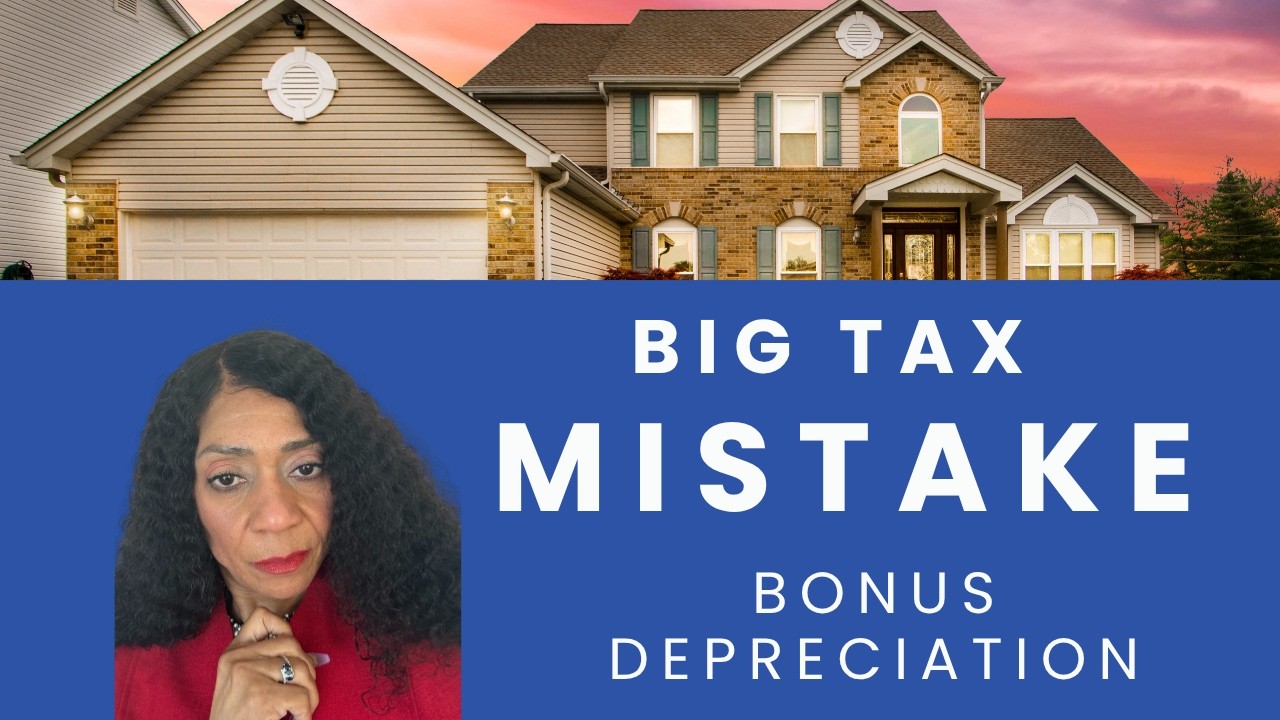
Real Estate Investors: Bonus Depreciation at 100% - Smart Move or Costly Mistake?
Why Bonus Depreciation Can Hurt Real Estate Investors Bonus depreciation has returned to 100% for qualifying property, creating new opportunities for real estate investors. However, the real question is not whether the deduction is available—but whether it should be used in the current year. In this video, I explain how timing, income levels, and overall tax strategy determine whether bonus depreciation actually provides value. Understanding when to use this strategy is just
lisa9372
Apr 151 min read
bottom of page